


Siberian Huskies and Alaskan Malamutes are two of the most recognized snow dog breeds in the world. Both have thick coats and strong working backgrounds, which often makes people confuse them with each other.
Even though they look similar, Huskies and Malamutes have many important differences in size, personality, energy level, training needs, and daily care.
One breed may fit your lifestyle much better than the other.
If you are trying to choose between these powerful northern dogs, this detailed guide will help you understand the key differences between Huskies and Malamutes.
History and Background of the Siberian Husky

The Siberian Husky was developed by the Chukchi people in Siberia. These dogs were bred to pull light sleds over long distances in freezing temperatures.
They are known for their speed, endurance, teamwork, and friendly nature. They gained popularity through sled races and Arctic expeditions.
Today, Siberian Huskies are popular as family pets, sled dogs, and adventure companions because of their playful personality, athletic ability, and striking appearance.
They are also known for their intelligence, outgoing nature, and strong desire to be part of a pack.
Their energetic temperament makes them a great choice for active families who enjoy outdoor activities and exercise.
Alaskan Malamute History and Characteristics

The Alaskan Malamute is one of the oldest Arctic sled dog breeds. Their native Inuit tribes in Alaska bred Malamutes to pull heavy sleds, carry supplies, hunt large animals, and survive harsh climates.
Unlike Huskies, Malamutes were bred for strength instead of speed.
They remain powerful working dogs with calm yet strong personalities. Even though they are working dogs, Malamutes are also trusted companions to their families.
They developed loyal and protective personalities because they worked closely with humans every day.
Their thick coats, sturdy build, and impressive endurance helped them thrive in some of the world’s harshest environments.
Today, they are admired for their affectionate nature, reliability, and deep bond with their owners.
Key Difference Between Husky and Malamute

While both are Arctic breeds, they differ in intelligence, grooming requirements, behavior, and personality traits. Read about them in detail below.
1. Intelligence and Trainability
Siberian Huskies are playful, social, and full of energy. They learn quickly but often ignore commands when distracted. Their independent nature can make training difficult for first-time owners.
Huskies also enjoy attention and may act silly or dramatic around people.
Alaskan Malamutes are intelligent, too, but they are usually more stubborn and strong-willed.
They respond best to calm and firm training. Because of their size and power, early obedience lessons and clear rules are very important.
2. Grooming Requirements
Huskies have thick double coats that shed heavily, especially during seasonal coat blowouts.
Their fur stays fairly clean naturally, but they still need weekly brushing and extra grooming during shedding seasons. Occasional baths also help keep their coat healthy.
Malamutes have even thicker and denser fur than Huskies.
Their coat traps loose hair easily, which means owners should expect heavy shedding, more brushing sessions, and extra grooming time throughout the year
3. Family Life and Behavior Around Other Pets
Huskies are friendly, playful, and usually good with children, strangers, and other dogs. Since they were bred to work in teams, they often enjoy living in multi-dog homes.
However, they have a strong prey drive and may chase smaller pets without proper training.
Because of their large size and strength, supervision around small children is recommended.
Malamutes are calmer and more protective of their families. They form strong bonds with owners but can be territorial with other animals.
While they are not typically listed among the most aggressive dog breeds, early socialization is still important.
4. Size and Physical Appearance
Siberian Huskies are medium-sized dogs with a lean and athletic body. Most weigh between 35 and 60 pounds and are built for speed and endurance.
Their striking blue, brown, or mixed-color eyes make them easy to recognize. Alaskan Malamutes are much larger and heavier.
They often weigh between 75 and 100 pounds or more. Malamutes have broader chests, thicker bones, and a stronger body made for pulling heavy loads in harsh weather.
5. Energy Levels and Exercise Needs
Huskies are extremely energetic dogs that need daily exercise to stay healthy and happy. They enjoy running, hiking, and outdoor games.
Without enough activity, they may become bored, noisy, or destructive inside the home.
Daily exercise also helps control their strength and prevents unhealthy weight gain.
Malamutes are active as well, though they are usually calmer indoors than Huskies. They still need regular walks, playtime, and mental stimulation.
6. Lifespan and Health Issues
Siberian Huskies usually live 12 to 15 years and are generally healthy. However, they may develop eye conditions, hip problems, or skin issues as they age. Regular exercise and vet checkups help keep them healthy.
Alaskan Malamutes often live around 10 to 14 years. Because of their larger size, they are more likely to face joint problems, hip dysplasia, and weight-related health issues.
A balanced diet and proper exercise are important for their well-being.
Husky Vs Malamute: Key Differences at a Glance
While Siberian huskies are medium-sized dogs, the malamutes are large, powerful dogs with a heavy, muscular build. Learn more about their temperament and physical appearance in the table below.
| Attribute | Siberian Husky | Alaskan Malamute |
| Overall Temperament | Playful, energetic, social, and outgoing. Huskies usually enjoy meeting new people and other dogs. | Calm, loyal, confident, and more independent. Malamutes are affectionate but often more reserved around strangers. |
| Energy Level | Extremely high energy with constant need for activity and movement. | High energy, but generally calmer indoors after exercise compared to Huskies. |
| Body Size | Medium-sized dog with a lean and athletic frame. | Large and powerful dog with a heavy, muscular build. |
| Build Type and Overall Appearance | Slim, lightweight, and built for speed and endurance. They look sleek, agile, and fast-moving. | Thick, broad, and built for strength and pulling heavy loads. Looks larger, heavier, and more powerful |
| Physical Strength | Strong and athletic, but lighter in pulling power. | Extremely strong and capable of pulling heavy loads for long distances. |
| Face Shape and Coat Type | Narrower face with a fox-like appearance. Also possesses a thick double coat that is softer and lighter. | Wider face with a stronger and more wolf-like appearance. Has a very dense and heavy double coat designed for harsh Arctic weather. |
| Eye Color and Tail Shape | They generally have blue, brown, or mixed-colored eyes. Beyond this, huskies have a bushy tail often carried in a relaxed curve. An An | An Alaskan Malamute usually has brown eyes only. Blue eyes are uncommon and not a breed standard. They possess a thick plume tail usually carried over the back. |
Can a Husky and Malamute Live Together?
This is one of the most common questions I get from owners considering both breeds. The short answer is yes, but it requires careful management.
Huskies are generally sociable with other dogs and adjust well to a multi-dog household. Malamutes are more likely to assert dominance, particularly with dogs of the same sex.
Early and consistent socialization from puppyhood helps create a peaceful household.
Adult introductions on neutral territory, with gradual supervised contact over several weeks, are the safer route if one dog is already established in the home.
Resource guarding is more common in Malamutes, so separate feeding is often recommended.
Both breeds have strong prey drives and can cause harm if conflicts escalate, so address any tension early with a trainer.
Husky vs Malamute Cost: Food, Grooming, and Vet Care
While both breeds need proper care to stay healthy, Malamutes usually cost more because of their size and higher food intake. Understanding these costs can help you choose the breed that better fits your lifestyle and budget.
1. Food Costs
Siberian Huskies usually cost less to feed because they are smaller and naturally eat moderate portions. Even with their high energy levels, Huskies are known for having an efficient metabolism.
Alaskan Malamutes require more food each month due to their larger body size and heavier build.
Since they are powerful working dogs, they often need diets rich in protein and nutrients to support their muscles, joints, and energy needs. Food expenses for Malamutes are generally higher over time.
2. Grooming Costs
Huskies have thick double coats that shed heavily during seasonal coat blowouts. Weekly brushing is usually enough for most of the year, but grooming becomes more demanding during shedding seasons.
Many owners manage Husky grooming at home, which can help reduce professional grooming expenses.
Professional grooming for Malamutes can cost more because their thick coat takes extra work to maintain properly.
Malamutes have a much denser and heavier coat that traps loose fur easily. They need more brushing sessions and longer grooming time to prevent matting and excessive shedding.
3. Vet Care Costs
Huskies are generally healthy dogs, but owners should still prepare for regular vet visits, vaccinations, flea prevention, and yearly health checks.
Some Huskies may develop eye conditions, skin issues, or hip problems as they age, which can increase long-term medical costs.
Malamutes often have higher vet expenses because larger dogs usually require more medication, larger treatment doses, and more costly surgeries if health problems develop.
They are more likely to face joint problems, hip dysplasia, and weight-related conditions, especially later in life.
Husky or Malamute: What Do Long-Time Owners Recommend?
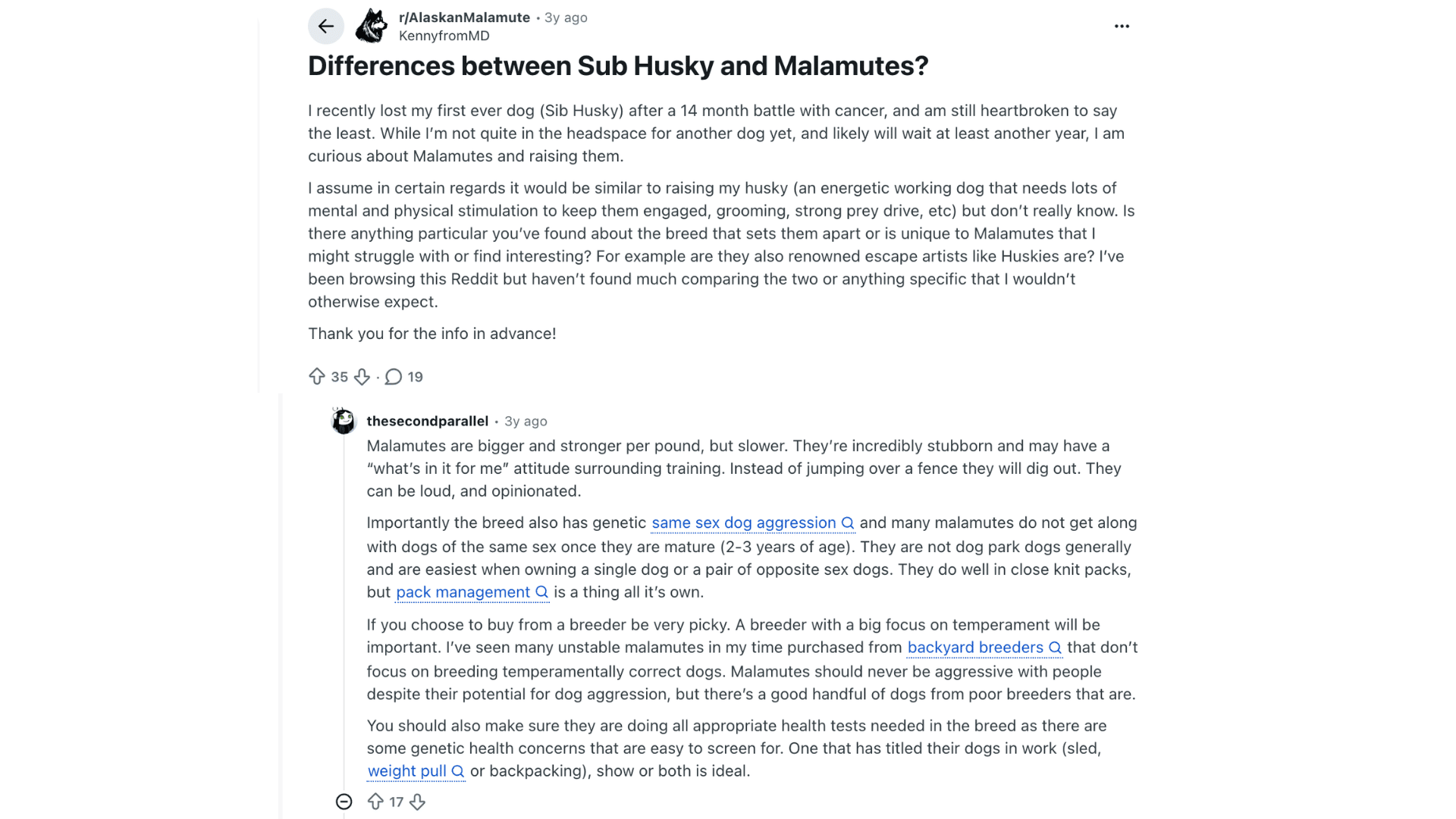
Based on discussions on Reddit, owners often describe Malamutes as more laid-back and stubborn than Huskies.
They share many traits, including high intelligence, strong prey drives, heavy shedding, and a love for outdoor activities. Malamutes are larger, stronger, and calmer than Huskies.
They are affectionate with family but often reserved with strangers.
While Huskies are known for their endless energy and roaming instincts, Malamutes tend to be calmer and more focused on staying close to their pack.
They are also famously stubborn, often deciding whether to follow a command.
Both breeds can be escape artists, but Malamutes are more likely to dig under fences than jump over them.
Overall, owners view Malamutes as loyal, independent, and powerful dogs that require consistent training, socialization, and secure containment.
Husky vs Malamute: Which One Should You Choose?
Now that you understand the primary differences between the Husky and the Malamute, let’s look at which one you should choose.
- Playful and Social Companion: I recommend opting for a husky as a playful, social companion, as they are very friendly, energetic, and outgoing dogs who enjoy being around people and other pets.
- Calm and Loyal Working Dog: For a calm and loyal working dog, you can go for Malemutes. While they are stronger and more independent than Huskies, they are also deeply loyal to their families.
- Active Lifestyle and Exercise Needs: Due to their size, energy levels, and exercise needs, neither breed is usually recommended among the best apartment dogs.
- Social Dog Around Strangers and Other Dogs: You can go with huskies, owing to their friendly behavior and ability to get along better with other dogs and enjoy social environments.
- Powerful Dog for Colder Climates and Outdoor Work: A Malamute is best suited to colder climates, as their strength and endurance make it an excellent companion for hiking and pulling activities.
- Require a Large and Strong Dog: Opt for Malamutes, as they usually do better with experienced dog owners who can provide firm leadership and consistent routines, and they boast a dense, heavy double coat.
Conclusion
Siberian Huskies and Alaskan Malamutes both come from Arctic working backgrounds, but they were bred for different jobs.
Huskies focused on speed and endurance, while Malamutes focused on strength and heavy hauling.
Choosing between the two depends mostly on your lifestyle and experience level. Both breeds need regular exercise, training, grooming, and attention to stay healthy and happy.
A Husky suits active families seeking an energetic companion, while a Malamute is better for owners wanting a loyal, powerful working dog.
With proper care and commitment, both Huskies and Malamutes can become loving and loyal lifelong companions.
Frequently Asked Questions
Which Is Bigger, a Husky or a Malamute?
Alaskan Malamutes are much bigger than Siberian Huskies. Malamutes usually weigh between 75 and 100 pounds or more, while Huskies typically weigh between 35 and 60 pounds.
Are Huskies Friendlier than Malamutes?
Yes, Huskies are generally more social and outgoing with strangers and other dogs. Malamutes are affectionate with family members but may act more reserved or protective around unfamiliar people.
Which Breed Is Easier to Train, the Husky or the Malamute?
Both breeds can be stubborn, but huskies are usually easier to manage because they are more social. Malamutes are more independent and dominant, so they often require experienced owners and firm training.
Which Dog Is Better for Families, Husky or Malamute?
Both breeds can be good family dogs, but Huskies are often better for active families. Malamutes are loyal and loving, too, but their larger size and strength may require extra supervision around small kids.