


A cat with wrinkled skin, oversized ears, and barely any fur is difficult to overlook. Yet its striking appearance is only part of what makes it special.
Choosing a hairless cat requires understanding its personality, grooming routine, temperature sensitivity, and possible health concerns.
I’ll compare popular breeds, including the Sphynx, Donskoy, Peterbald, Bambino, Minskin, and Lykoi, so you can see how they differ in breed origin, appearance, temperament, and care needs, along with practical guidance on costs, health problems, and what to know before bringing one home.
What Are the Hairless Cats Called?
Hairless cats are commonly called Sphynx cats, but the Sphynx is only one of several hairless cat breeds. Other well-known breeds include the Peterbald, Donskoy, Bambino, Elf Cat, Ukrainian Levkoy, and Kohana.
Despite their name, many hairless cats have a fine layer of soft fuzz that feels like suede or peach skin.
These breeds are known for their affectionate personalities, playful nature, and need for regular skin care because they lack the protective coat found on most other cats.
What Are the Key Characteristics of a Hairless Cat?
Hairless cats share several recognizable physical and behavioral traits, although characteristics can vary between breeds.
- Minimal or No Fur: Most have bare skin or a fine layer of peach-like fuzz that may feel warm and soft.
- Wrinkled Skin: Visible folds commonly appear around the face, neck, shoulders, and legs, giving these cats their distinctive look.
- Large Ears: Many hairless breeds have prominent ears that require routine cleaning because wax and oil can build up quickly.
- Warm Body: Their exposed skin feels warmer to the touch, although their normal internal body temperature is similar to other cats.
- Social Personality: Hairless cats are often affectionate and people-oriented, enjoying attention, interactive play, and close companionship.
- Higher Grooming Needs: Without fur to absorb natural oils, they need regular bathing, skin checks, nail cleaning, and protection from extreme temperatures.
The Most Popular Hairless Cat Breeds
Although their appearance is unusual, several hairless varieties have earned a place among today’s popular cat breeds because of their affectionate personalities.
1. Sphynx Cat

The Sphynx is the world’s best-known hairless cat breed. It originated in Canada during the 1960s after a natural genetic mutation produced a kitten with very little fur.
Although often described as bald, most Sphynx cats have a fine layer of soft fuzz that feels like peach skin.
They are friendly, energetic, and highly social, often seeking attention from their owners.
Their wrinkled skin, large ears, and expressive eyes make them easy to recognize and one of the most popular companion cats today.
2. Donskoy Cat

The Donskoy, also known as the Don Sphynx, originated in Russia in the late 1980s.
Unlike the Sphynx, its hairlessness comes from a dominant genetic mutation, making the two breeds genetically different.
Donskoys have muscular bodies, loose skin, and an affectionate personality.
They are intelligent, curious, and enjoy spending time with their families. Regular bathing and skin care help remove natural oils that would normally be absorbed by a coat.
3. Peterbald Cat

The Peterbald was developed in Russia by crossing the Donskoy with the Oriental Shorthair.
Unlike some hairless breeds, Peterbalds may be completely hairless or have a short, velvety, or brush-like coat.
Their long, slender bodies and large ears give them an elegant appearance.
Peterbalds are active, intelligent, and affectionate cats that enjoy interactive play and close human companionship. They also need regular skin care because of their minimal coat.
4. Bambino Cat
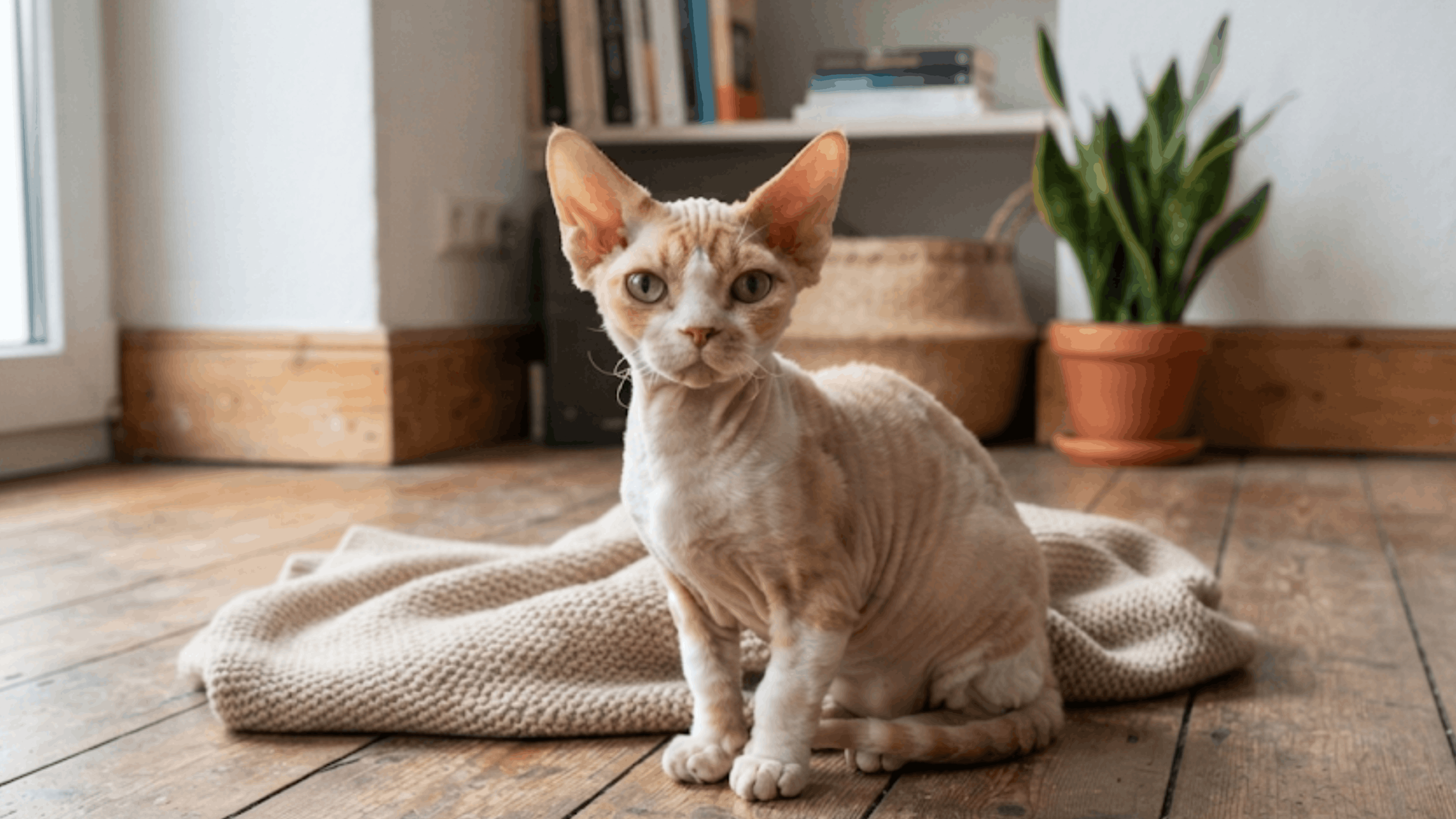
The Bambino is a relatively new breed created by crossing the Sphynx with the Munchkin cat.
It combines a nearly hairless body with short legs, giving it a distinctive appearance. Despite their smaller size, Bambinos are energetic, playful, and surprisingly agile.
They enjoy climbing, exploring, and interacting with people and other pets.
Like other hairless breeds, they require routine bathing and protection from cold weather and direct sunlight to keep their skin healthy.
5. Elf Cat

The Elf Cat is a rare hybrid breed developed by crossing the Sphynx with the American Curl.
It is best known for its hairless body and distinctive ears that curl backward. Elf Cats have muscular builds, wrinkled skin, and outgoing personalities.
They are friendly, curious, and enjoy being around people throughout the day.
Because they have little or no fur, they benefit from regular bathing, ear cleaning, and protection from extreme temperatures.
6. Dwelf Cat
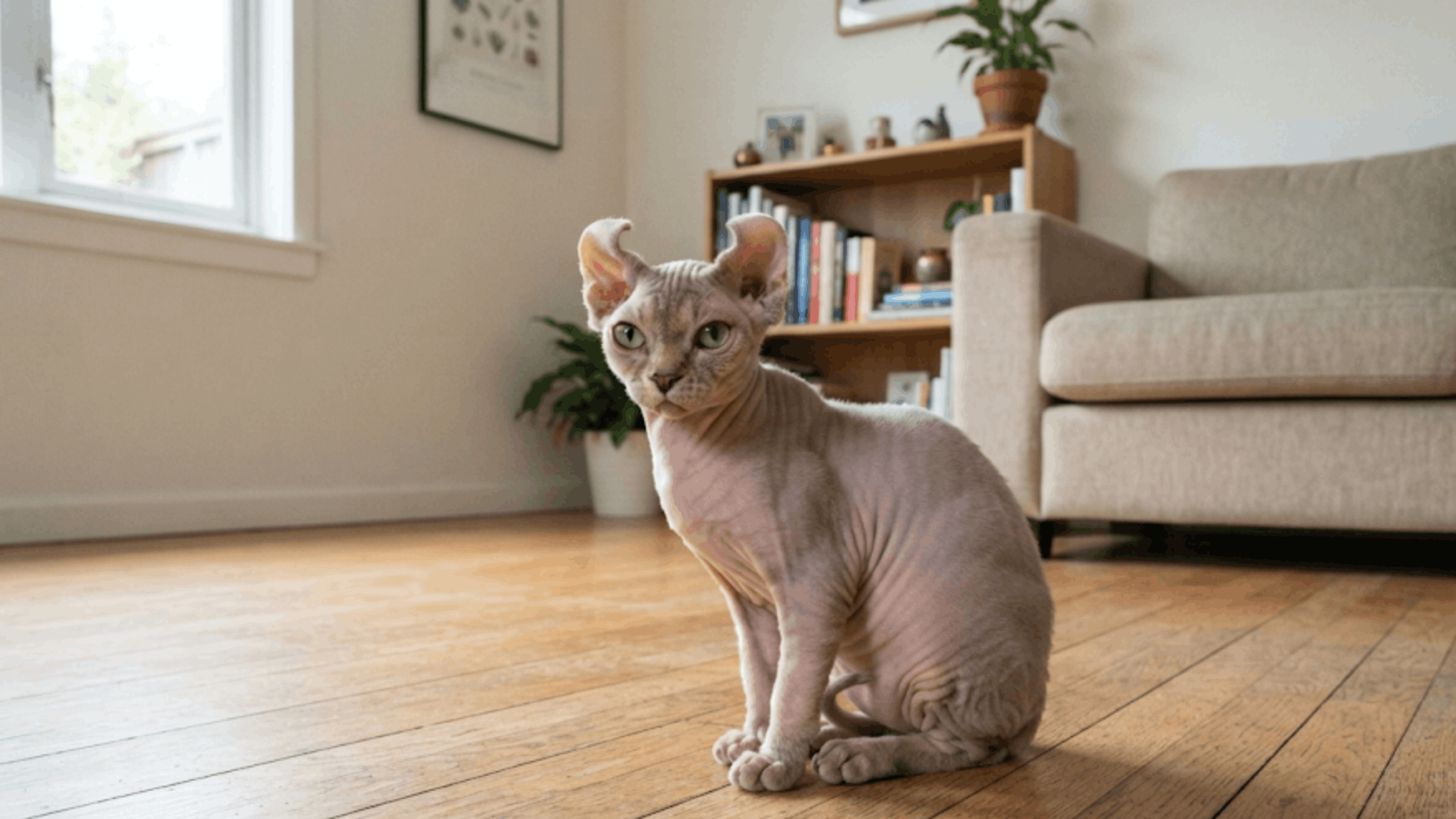
The Dwelf is a rare hybrid breed developed by crossing the Sphynx, Munchkin, and American Curl.
It is recognized by its nearly hairless body, short legs, and distinctive curled ears. Despite its unusual appearance, the Dwelf is active, curious, and enjoys spending time with people.
These cats are known for their playful and affectionate personalities.
Like other hairless breeds, they need regular bathing, ear cleaning, and protection from cold weather and prolonged sun exposure.
7. Ukrainian Levkoy

The Ukrainian Levkoy is a rare breed developed in Ukraine by crossing the Donskoy with the Scottish Fold.
It is easily identified by its nearly hairless body and unique inward-folding ears. Levkoy cats have lean, muscular builds and are known for being calm, intelligent, and loyal companions.
They adapt well to family life and enjoy interacting with their owners.
Their exposed skin requires routine care, including regular bathing and protection from extreme temperatures to maintain good skin health.
8. Minskin Cat

The Minskin combines the Munchkin’s short legs with the Sphynx’s hairlessness, with Devon Rex and Burmese influence further back in its lineage.
Most Minskins have small patches of fur on their extremities while the rest of the body stays bare or fuzzy.
They’re small, sturdy cats known for being social, playful, and comfortable with children and other pets.
Because they share the Munchkin’s short-legged build, Minskins are generally less prone to jumping onto high surfaces than other hairless breeds.
9. Lykoi Cat

The Lykoi isn’t fully hairless, but its sparse, patchy roan coat has earned it the nickname “werewolf cat.”
The breed originated in the United States and was first recognized in the early 2010s, developed from a natural mutation rather than deliberate crossbreeding.
Lykoi cats have slender, muscular bodies and a coat that looks perpetually mid-shed.
Despite the wild appearance, they tend to be affectionate, energetic, and closely bonded to their owners. Their partial coat still needs monitoring for dryness and skin irritation.
Hairless Cat Care Routine
Hairless cats need consistent grooming to keep their skin healthy. Following a regular care schedule helps prevent oil buildup, skin irritation, and other common issues.
| Care Task | How Often | Why It Matters |
|---|---|---|
| Bathing | Every 1–2 weeks | Removes excess oil and keeps the skin clean. |
| Ear Cleaning | Once a week | Prevents wax buildup and reduces the risk of infection. |
| Nail Trimming | Every 2–4 weeks | Keeps nails healthy and prevents scratching injuries. |
| Nail Bed Cleaning | Weekly | Removes oils and dirt that collect around the nails. |
| Teeth Brushing | 2–3 times a week | Supports good dental health and helps prevent gum disease. |
| Skin Check | Weekly | Helps spot dryness, irritation, or other skin problems early. |
| Veterinary Checkup | At least once a year | Monitors overall health and screens for breed-related conditions. |
Ask your veterinarian what vaccines cats need based on their age, health, lifestyle, and possible exposure to other animals.
Are Hairless Cats Hypoallergenic?
No cat, including hairless breeds, is completely hypoallergenic. The main allergen behind most reactions is a protein called Fel d 1, found in a cat’s saliva and skin oil rather than in the hair itself.
Cats spread this protein through grooming, and it collects on fur before shedding into the home as loose hair and dander.
Hairless cats still produce Fel d 1 but shed less allergen onto furniture, clothing, and carpets. That’s why many people with mild cat allergies tolerate hairless breeds better than heavily coated ones, even though the cat isn’t allergen-free.
Anyone with a moderate to severe allergy should spend time with a hairless breed before committing, since individual reactions vary from person to person.
This is for informational purposes only; anyone with a diagnosed cat allergy should consult a doctor or allergist before bringing a new cat into the home.
Mistakes to Avoid when Caring for a Hairless Cat
Proper care helps hairless cats stay healthy, comfortable, and free from preventable skin and health problems. Avoid these common mistakes.
- Skipping regular baths: Excess skin oils can build up and lead to irritation or acne if not cleaned regularly.
- Ignoring ear cleaning: Hairless cats often produce more earwax, increasing the risk of wax buildup and infections.
- Leaving them in extreme temperatures: Without a fur coat, they can become too cold or get sunburned more easily than other cats.
- Using harsh grooming products: Human soaps and strong shampoos can dry out or irritate sensitive skin. Always use cat-safe products.
- Overfeeding and limiting exercise: Hairless cats have healthy appetites, so portion control and daily play are important to prevent weight gain.
- Missing routine veterinary checkups: Regular health exams help detect heart disease, dental issues, and other conditions before they become serious.
How Much Does a Hairless Cat Cost?
The cost of owning a hairless cat depends on whether you adopt or purchase one from a breeder.
| Expense | Typical Cost (USD) |
|---|---|
| Adoption Fee | $100–$500 |
| Purchase From a Breeder | $1,500–$3,500+ |
| Food (Per Month) | $30–$70 |
| Grooming Supplies | $10–$30 per month |
| Routine Veterinary Care | $200–$600 per year |
| Pet Insurance | $20–$50 per month |
Before paying a seller, review the Federal Trade Commission’s advice on avoiding pet scams, research the breeder, and avoid untraceable payment methods.
Common Health Problems in Hairless Cats
Hairless cats are generally healthy, but like all breeds, they can be prone to certain health conditions.
- Hypertrophic Cardiomyopathy (HCM): A hereditary heart condition that affects many cat breeds, including the Sphynx. Regular heart screenings are recommended.
- Skin Irritation: Natural oils can build up on exposed skin, leading to acne, rashes, or infections if the skin is not cleaned regularly.
- Sunburn: Without a protective coat, hairless cats are more sensitive to direct sunlight and should spend limited time outdoors.
- Ear Infections: Excess wax can collect inside the ears, making routine cleaning an important part of grooming.
- Dental Disease: Hairless breeds may be more prone to gum disease, so regular tooth brushing and veterinary dental care are beneficial.
- Obesity: Hairless cats enjoy eating and may gain excess weight without portion control and regular exercise.
Pros and Cons of Owning a Hairless Cat
Hairless cats can make loving and entertaining companions, but they also come with responsibilities that differ from those of coated breeds.
| Pros | Cons |
|---|---|
| Affectionate and enjoy spending time with people. | Need regular bathing to remove excess skin oils. |
| Shed very little, leaving less fur on furniture and clothing. | Require frequent ear, nail, and skin care. |
| Intelligent and easy to engage with toys and training. | More sensitive to cold weather and direct sunlight. |
| Playful and energetic well into adulthood. | May have higher grooming and veterinary costs. |
| Usually get along well with children and other pets when socialized. | Can become lonely if left alone for long periods. |
Conclusion
Hairless cats are much more than their unusual appearance. From the well-known Sphynx to rarer breeds like the Donskoy, Peterbald, Bambino, Elf Cat, Dwelf, and Ukrainian Levkoy, each offers a unique mix of personality, appearance, and care needs.
Knowing their grooming, health, temperament, and costs can help you decide if a hairless cat is right for you.
If you’re considering a hairless cat, choose a reputable breeder or adoption organization, learn about the breed’s care requirements, and be prepared to provide regular attention and grooming.
With the right care, a hairless cat can become a healthy, affectionate, and loyal companion for many years.
Frequently Asked Questions
Are Hairless Cats Cuddly?
Yes, many hairless cats are affectionate and enjoy close contact with people. They often seek warm laps, blankets, and regular attention from family members.
Do Hairless Cats Smell?
Hairless cats may develop a mild odor when natural skin oils build up. Regular bathing, clean bedding, and proper grooming can help control it.
Can Hairless Cats be Left Alone?
Hairless cats can stay alone for short periods, but many prefer companionship. Long periods without play or interaction may lead to boredom or stress.
Do Hairless Cats Need to Wear Clothes?
They usually do not need clothes in a comfortably heated home. A soft, well-fitted sweater may help during colder weather when used safely.